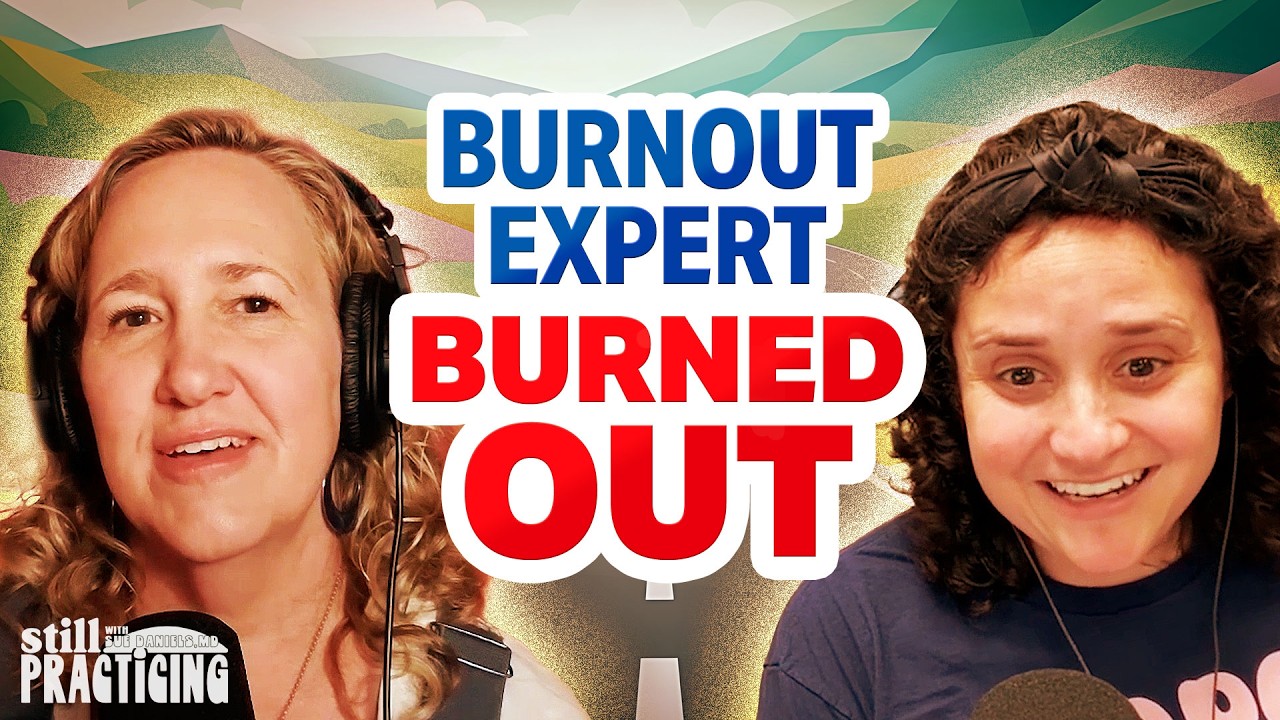
Why Knowing the Signs of Burnout Doesn't Stop Healthcare Professionals From Missing Their Own
Medical training teaches us to recognize the clinical presentations of occupational fatigue, emotional exhaustion, and detachment in our peers, yet healthcare professionals consistently fail to diagnose burnout in themselves. Understanding this blind spot requires examining the psychological defenses of intellectualization, the normalization of systemic dysfunction, and the unique dangers of deeply meaningful work.
Key Takeaways
- Possessing academic knowledge of burnout symptoms provides zero immunity against experiencing and ignoring them firsthand.
- Intellectualizing psychological distress allows professionals to analyze their condition clinically rather than feeling it emotionally.
- When an entire medical department is exhausted, individual burnout gets mislabeled as normal operational reality rather than a crisis.
- Meaningful work acts as a trap, encouraging high-achieving professionals to continuously pour energy into a broken container.
- External perspective from loved ones is often the only reliable diagnostic tool when internal self-monitoring fails.
The Paradox of Clinical Awareness in Medicine
For decades, medical education has focused on teaching clinicians how to spot pathology in others. We memorize criteria, observe behavioral shifts, and design wellness curricula aimed at catching fatigue before it crosses the threshold into clinical depression or profound burnout. Yet, when wellness experts and seasoned clinicians themselves experience the gradual erosion of their professional joy, they are routinely the last to know.
This phenomenon is not a failure of intelligence; it is a structural hazard of medical training. Clinicians are conditioned to prioritize objectivity, emotional detachment, and continuous high performance. When personal distress begins to manifest, the default medical response is to diagnose rather than react. A physician feeling cynical or detached does not immediately think, I am burning out. Instead, they think about workflow inefficiencies, administrative burdens, or temporary high-census periods. By framing their internal state as an external logistics problem, they effectively blind themselves to their own suffering.
Why Intellectualization Protects Us From the Truth
Intellectualization is a defense mechanism that allows individuals to cope with emotional stress by treating it as an intellectual puzzle to be solved rather than an emotional reality to be felt. In healthcare, this defense is reinforced daily. Doctors, nurses, and allied health professionals spend their entire careers translating human suffering into data points, differential diagnoses, and treatment plans.
When burnout begins to take root, this exact skill set turns against the clinician. An expert in mental health or physician wellness can read every study on emotional exhaustion, cite the exact statistics on healthcare attrition, and lecture trainees on self-care—all while completely ignoring the physiological and emotional toll their own career is taking. Because they can talk intelligently about burnout, they assume they are managing it. They mistake verbalizing the concept for escaping its reality.
Normalization: When Half Your Colleagues Are Burned Out
Context matters immensely in how we perceive our own well-being. If an individual is working in an environment where every single colleague around them is exhausted, irritable, and dreading their shifts, that state of being ceases to look like pathology. It becomes the baseline culture.
When burnout is ubiquitous, it gets rebranded as simply 'what the job is.' A clinician working seventy hours a week who finds themselves losing patience with patients might feel guilty, but when they walk down the hallway and see every peer doing the exact same thing, their internal alarm system stands down. The collective misery validates individual suffering as normal. We look around, see everyone else surviving in the exact same toxic ecosystem, and conclude that if everyone is doing it, our own struggle must just be a personal failure of resilience rather than a sign of systemic collapse.
The Hidden Danger of Deeply Meaningful Work
One of the most insidious contributors to unrecognized burnout is the very reason most people enter healthcare in the first place: meaning. Medicine, patient care, and clinical advocacy are deeply purposeful endeavors. They matter on a fundamental, human level.
However, purpose is a double-edged sword. When work feels profoundly meaningful, it is extraordinarily difficult to walk away, set boundaries, or acknowledge when the cost is too high. High-achieving professionals will continuously sacrifice their physical health, emotional bandwidth, and personal relationships because the alternative—stepping back from a population that needs them—feels morally unacceptable. Burnout experts and dedicated clinicians keep pouring themselves into meaningful work long after the container is empty, convinced that their passion will somehow substitute for rest.
Learning to Trust Outside Eyes
Because internal monitoring systems fail under the weight of intellectualization and normalization, healthcare professionals must learn to rely on an external diagnostic tool: the people who love them.
Partners, children, and close friends are often acutely aware of our burnout long before we are willing to admit it to ourselves. They see the exhaustion in our posture, the irritability in our tone, and the joy missing from our presence. Yet, highly trained professionals have a frustrating tendency to dismiss this feedback. We rely on our clinical training to argue away their concerns, rationalizing that they simply don't understand the realities of our medical practice.
Overcoming this requires a radical shift in perspective. When family members or close friends gently suggest that something is off, the correct response is not to defend the workload or explain the system. The correct response is to listen. They are usually right.
Conclusion
Recognizing burnout in yourself requires letting go of the arrogant belief that your medical training or professional expertise makes you immune to the emotional realities of a broken system. It requires trading intellectualized coping strategies for honest self-reflection and opening the door to outside feedback from those who know you best.
To dive deeper into how even leading wellness experts miss the warning signs of their own professional exhaustion, Listen to the full episode of Still Practicing featuring Dr. Jessi Gold. Join Dr. Sue Daniels as they explore what happens when the experts finally take off their clinical coats and confront their own burnout.
Frequently Asked Questions
Why do healthcare professionals miss their own burnout?
Clinicians frequently miss their own burnout due to a combination of intellectualization, the normalization of high stress within medical culture, and the defensive habit of diagnosing operational problems rather than acknowledging personal emotional exhaustion.
How does intellectualization affect burnout recovery?
Intellectualization allows professionals to talk, write, and think about burnout clinically without actually feeling the emotional reality of their own condition. This creates a false sense of control that delays true recovery.
Why is meaningful work dangerous for burnout?
When work feels deeply purposeful, professionals are far more likely to ignore physical and emotional warning signs. The high intrinsic value of the job justifies continuous self-sacrifice, making it difficult to set necessary boundaries.
Who is most reliable for spotting unrecognized burnout?
Loved ones, partners, and family members are typically the most reliable observers of early burnout. Because internal self-monitoring often fails under stress, outside perspectives are essential for catching shifts in mood, energy, and presence.


 Podcast Addict
 TuneIn
 PlayerFM
 Podchaser
 Deezer
 Castbox
 PocketCasts
 Pandora